Registered Address Requirements for a software startup Considering a Jakarta Virtual Office
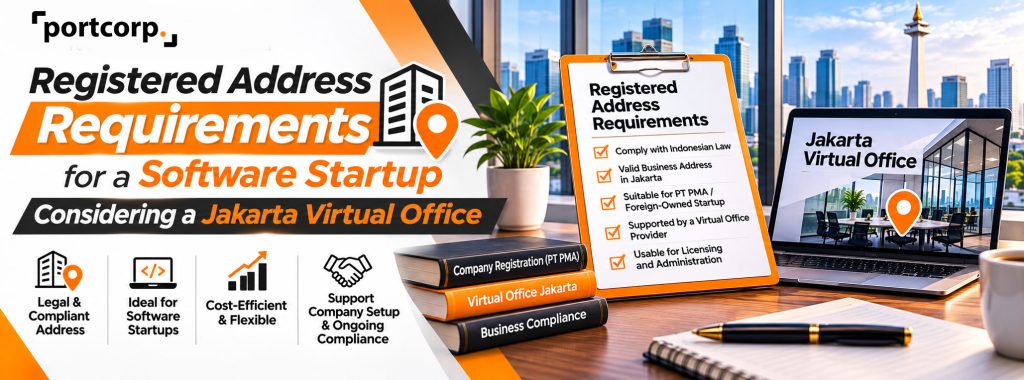
Establishing a software startup in Jakarta requires more than developing an innovative application, recruiting talented engineers, and attracting customers. Founders must also establish a legally recognized business presence that supports company incorporation, business licensing, taxation, and ongoing corporate administration. Although software companies can operate remotely, Indonesian business regulations still require companies to maintain appropriate registered address information.
For many technology entrepreneurs, a virtual office offers an attractive alternative to renting traditional commercial premises. Software developers can collaborate through cloud-based platforms, SaaS businesses can serve customers without a physical storefront, and founders can manage operations from different locations. These characteristics make virtual offices particularly appealing to early-stage startups that want to control operating expenses while establishing a professional business presence.
However, choosing a virtual office in Jakarta involves more than comparing rental prices or selecting a prestigious business district. The proposed address must be evaluated against the company’s legal structure, KBLI classification, business licensing requirements, and tax registration needs. This article explains the registered address requirements software startup founders should understand before signing a Jakarta virtual office agreement.
Why a Registered Business Address Matters for Software Startups
Every Indonesian limited liability company must have an identifiable legal domicile and complete business address. The company’s domicile is established through its articles of association, while its address information is used for corporate administration, licensing, taxation, and official correspondence. These requirements remain relevant even when the company operates entirely through digital infrastructure and its employees work remotely.
For software startups, the registered address also helps establish consistency across corporate documents and commercial transactions. Banks, enterprise customers, business partners, and government agencies may request information about the company’s registered location when conducting administrative or compliance checks. An incomplete or inconsistent address can create unnecessary complications during these processes, particularly for foreign-owned businesses that must coordinate documentation across several jurisdictions.
A registered address should therefore be viewed as part of the company’s legal and administrative infrastructure rather than simply a place to receive letters. Selecting an appropriate address during incorporation can reduce the likelihood of future amendments and help founders concentrate on developing their software products.
Can a Software Startup Legally Use a Virtual Office in Jakarta?
A software startup may be able to use a virtual office as its registered address in Jakarta, provided the arrangement satisfies the applicable corporate, licensing, and administrative requirements. Virtual office providers typically offer access to a business address, correspondence handling, reception services, and meeting facilities without requiring tenants to occupy permanent office space. This arrangement can be practical for businesses whose daily activities do not depend on dedicated physical premises.
Nevertheless, not every software-related activity has identical location requirements. A company providing custom programming services may have different operational needs from a business operating physical servers, specialized testing equipment, or hardware development facilities. Founders should therefore examine their actual business activities before assuming that a virtual office will be suitable.
The company’s legal structure also matters when evaluating the proposed address. Foreign founders establishing a PT PMA should verify that the location can support the intended company registration and relevant licensing procedures. A virtual office agreement alone does not establish that the address is acceptable for every administrative purpose.
1. Verify the Company’s Legal Domicile and Complete Address
One of the first considerations is whether the proposed virtual office address accurately supports the company’s intended legal domicile. Under Indonesian company law, a limited liability company’s articles of association identify its domicile, while its complete address is maintained through relevant corporate records. Founders should confirm that the address supplied by the virtual office provider is complete, accurate, and suitable for the company’s proposed registration.
A proper business address should clearly identify the building, unit or office location, street, administrative district, city, and postal code where applicable. This information should be consistent across the company’s incorporation documents, OSS registration, and tax administration records. Even minor discrepancies can lead to additional verification requests or delays when institutions compare corporate information.
Before signing a contract, founders should request the full address details and supporting documentation from the provider. They should also confirm whether the address can be used for the intended corporate registration purpose. Completing this review before preparing incorporation documents is generally more efficient than correcting address information after registration has begun.
2. Confirm That the Address Matches the Company’s KBLI Activities
Indonesia uses the Klasifikasi Baku Lapangan Usaha Indonesia (KBLI) system to classify business activities. For software startups, the appropriate classification depends on whether the company develops custom applications, publishes software products, provides IT consulting, operates digital platforms, or performs other technology-related activities. These distinctions matter because different classifications may involve different licensing and operational requirements.
A remote software development business may have relatively limited physical infrastructure needs, while a company operating a data center or specialized technology facility may require dedicated premises. Similarly, a startup that provides software services to corporate clients may face different considerations from a business operating a regulated digital platform. The suitability of a virtual office should therefore be assessed against the specific activities recorded in the company’s business registration.
Founders should review the applicable KBLI 2025 descriptions and confirm the relevant requirements through the current OSS framework. Selecting a virtual office before determining the company’s actual business classification can create avoidable complications. A more reliable approach is to identify the intended business activities first and then evaluate whether the proposed address is appropriate.
3. Review OSS Business Licensing and Location Requirements
The Online Single Submission system, commonly known as OSS, plays a central role in Indonesia’s risk-based business licensing framework. Companies use the system to obtain a Business Identification Number, or NIB, and address other licensing requirements applicable to their activities. The company’s registered business location forms part of the information relevant to this process.
Software startup founders should verify that the proposed virtual office address is consistent with the location requirements applicable to their business. Depending on the activity and premises, relevant considerations may include spatial planning rules, permitted building use, and other location-related requirements. A commercial building address may be appropriate for certain office-based activities, but its commercial appearance alone does not guarantee eligibility.
This verification is especially important when a startup plans to expand beyond ordinary software development. If the business later introduces activities requiring physical facilities or additional licenses, its original address arrangement may no longer be sufficient. Reviewing these issues during incorporation can help founders make better decisions about their initial office setup.
4. Examine the Virtual Office Provider’s Legal Documentation
The reliability of the virtual office provider is an important part of selecting a registered address. Founders should not assume that every provider offering a prestigious Jakarta address can supply the documentation needed for company registration and ongoing administration. The provider should be able to explain its business arrangement, available facilities, and the supporting documents it can provide.
Before entering into an agreement, software entrepreneurs should request relevant information about the provider’s business registration, the address being offered, and the contractual terms governing its use. They should also ask whether the provider can supply supporting documentation for applicable incorporation or tax registration procedures. The precise documents required may depend on the startup’s legal structure and intended activities.
The service agreement should clearly identify the contracting parties, address, contract period, included facilities, and additional charges. Founders should review renewal and termination conditions because changes in the office arrangement may affect corporate administration. A transparent agreement reduces uncertainty and makes it easier to assess whether the provider can support the startup’s requirements.
5. Understand the Difference Between Company Registration and PKP Registration
A critical distinction for software startups is that using a virtual office for company registration does not automatically mean the same address will satisfy all tax registration requirements. Companies intending to obtain Pengusaha Kena Pajak (PKP) status must consider the applicable rules governing VAT taxable entrepreneur registration. This is particularly relevant for SaaS companies and software service providers planning to invoice Indonesian corporate customers.
Directorate General of Taxes Regulation PER-07/PJ/2025 establishes conditions for certain businesses seeking PKP registration using a virtual office. These conditions include requirements concerning the business activity, the nature of the office arrangement, and the facilities provided. For qualifying businesses, the virtual office contract must generally have a minimum duration of one year from the PKP application date.
The regulation also distinguishes a genuine virtual office arrangement from an address used solely for correspondence. The provider must satisfy applicable requirements concerning physical facilities and office support services. Consequently, founders should verify whether their intended virtual office package can support the relevant tax registration objectives before making a financial commitment.
6. Choose a Contract Duration That Supports Business Registration
Virtual office providers may offer packages with different contract durations, payment schedules, and service arrangements. A shorter contract can appear attractive to early-stage software startups that want to preserve cash while testing their business model. However, founders should evaluate whether the proposed duration is sufficient for their intended corporate and tax administration requirements.
For example, the minimum one-year agreement requirement under PER-07/PJ/2025 is particularly relevant when an eligible business intends to use a virtual office for PKP registration. This should not be confused with a universal rule requiring every virtual office tenant to sign a one-year contract for every purpose. The appropriate contract duration depends on the company’s circumstances and the administrative processes it expects to complete.
Founders should also consider the practical value of address continuity. Frequently changing a registered address may require updates to corporate records, licensing information, banking documentation, and commercial correspondence. Choosing a suitable contract period from the beginning can help reduce these administrative disruptions.
7. Ensure Reliable Handling of Official Correspondence
A registered business address should provide a dependable point of contact for official communications. Government agencies, banks, business partners, and customers may send important documents to the company’s registered location. For remote-first software startups, reliable correspondence handling is especially important because founders and employees may rarely visit the physical premises.
Before selecting a provider, founders should understand how incoming letters and documents are received, recorded, stored, and forwarded. They should ask whether the provider sends immediate notifications, whether authorized representatives can collect documents, and how confidential correspondence is protected. These operational details may be more important than the appearance of the building or its location within a prestigious business district.
Software companies should also consider the sensitivity of their commercial documents. Contracts, financial records, customer correspondence, and intellectual property agreements may contain confidential information. A provider with clear document-handling procedures can help the startup maintain better administrative control while its employees work remotely.
8. Consider Corporate Banking and Business Verification
After incorporation, software startups frequently need corporate bank accounts, payment processing facilities, and commercial relationships with enterprise customers. These organizations may conduct their own due diligence before approving applications or entering into business arrangements. A company’s registered address can form part of the information reviewed during these procedures.
Using a virtual office does not automatically prevent a company from opening a corporate bank account. However, individual banks may request additional information about the company’s operations, beneficial owners, business activities, and address arrangements. Foreign-owned software companies should be particularly careful to maintain accurate and consistent corporate documentation.
Founders should contact their intended banking provider to understand the relevant requirements before committing to a particular office package. They should also ensure that the virtual office provider can supply appropriate supporting documents where necessary. This preparation can reduce uncertainty when the company begins managing customer payments and operating expenses.
9. Evaluate Whether the Startup Needs Physical Workspace
A virtual office can be suitable for software startups that operate with distributed teams and conduct most business activities online. Developers may collaborate remotely, customer support teams may use cloud-based systems, and sales representatives may visit clients when necessary. Under these circumstances, renting permanent office space may offer limited operational value during the early stages of growth.
However, the needs of a technology company can change as its team expands. Startups may eventually require dedicated meeting rooms, secure workstations, training facilities, or collaborative development spaces. Companies operating hardware laboratories, physical servers, or specialized equipment may need appropriate premises from the beginning.
Founders should therefore distinguish between their administrative address requirements and their actual workspace needs. A virtual office may address the first requirement without necessarily satisfying the second. Understanding this distinction helps avoid selecting an arrangement that appears inexpensive but does not adequately support the business.
10. Plan for Future Changes to the Registered Address
Software startups often experience changes in their operational structure as they acquire customers, raise investment, or expand their teams. A business that begins with a virtual office may eventually move to a coworking facility or lease a dedicated commercial office. Such a transition should be considered when evaluating the original address arrangement.
Changing the company’s registered address may require updates to corporate records, OSS information, tax administration, and other relevant registrations. The exact procedures depend on whether the company is moving within the same legal domicile or changing its domicile. Founders should obtain appropriate advice before assuming that an address change is merely an internal administrative matter.
The virtual office agreement should also explain the procedures for termination, renewal, and document collection after the contract ends. A provider with clear policies can make a future relocation easier to manage. Considering these details before signing helps the startup maintain flexibility as its operational needs develop.
Registered Address Checklist for Software Startups in Jakarta
Before committing to a virtual office, founders should complete a structured review of the proposed address and service arrangement. This process should consider legal requirements, administrative support, and the company’s expected operational needs. The following checklist can help identify important questions before incorporation documents are prepared.
| Requirement | Questions to Ask |
|---|---|
| Legal domicile | Is the address suitable for the company’s intended domicile? |
| Complete address | Are all building, unit, street, and administrative details accurate? |
| KBLI compatibility | Does the address support the startup’s registered software activities? |
| OSS registration | Are applicable location and licensing requirements satisfied? |
| Provider documentation | Can the provider supply the necessary supporting documents? |
| Tax registration | Can the arrangement support the company’s intended PKP application? |
| Contract duration | Is the agreement sufficiently long for the intended administrative purposes? |
| Physical facilities | Are genuine office and meeting facilities available where needed? |
| Correspondence handling | How are official documents received and forwarded? |
| Future relocation | What procedures apply when the company changes its address? |
Founders should not treat the checklist as a substitute for verifying applicable regulatory requirements. Instead, it provides a practical framework for discussing the proposed arrangement with a virtual office provider and business establishment adviser. Resolving these questions early can prevent delays during company registration and subsequent administration.
Practical Example: A Foreign SaaS Startup Establishing Its Jakarta Address
Consider an Australian technology company planning to establish a PT PMA in Jakarta. The company develops subscription-based project management software for Indonesian corporate customers, while most of its engineers work remotely. Its founders want to establish a professional business presence without committing to an expensive permanent office during the first year.
A virtual office appears suitable because the company does not require dedicated development premises. However, the founders also expect to register for VAT purposes and issue invoices to enterprise customers. They therefore need to verify more than the availability of a business address.
Before signing an agreement, the founders should confirm the appropriate KBLI classification, evaluate the proposed address against relevant OSS requirements, and review the conditions applicable to PKP registration. They should also examine the provider’s documentation, office facilities, and correspondence handling procedures. If the arrangement satisfies the relevant requirements, it may provide a practical foundation for the startup’s initial Indonesian operations.
How Portcorp Supports Software Startup Address Planning in Jakarta
For foreign software entrepreneurs, choosing a registered address is closely connected to the broader process of establishing a company in Indonesia. Questions about PT PMA incorporation, KBLI classification, business licensing, and tax administration often arise together. Addressing these matters through a coordinated process can help founders avoid selecting an office arrangement that conflicts with their intended business activities.
Portcorp provides business establishment and corporate administration support for companies entering the Indonesian market. For founders exploring a virtual office jakarta arrangement, Portcorp can help discuss the relevant registration considerations and available business setup services. This may be particularly useful for foreign-owned software companies that need to coordinate corporate documentation while their founders remain overseas.
Depending on the company’s circumstances and the agreed service scope, relevant support may involve reviewing incorporation requirements, discussing business classification considerations, coordinating corporate documentation, and identifying administrative requirements associated with the proposed address. The suitability of any specific virtual office should still be verified before entering into an agreement. A structured review can help founders make a more informed decision without unnecessarily diverting attention from product development.
Frequently Asked Questions
Can a foreign-owned software startup use a virtual office for PT PMA registration?
A foreign-owned software startup may be able to use a virtual office for PT PMA registration when the proposed address satisfies the applicable requirements. The company should verify the suitability of the address in relation to its business activities, KBLI classification, and registration procedures. The fact that the startup operates remotely does not automatically establish that every virtual office location will be acceptable.
Is a virtual office address automatically accepted by OSS?
No. The suitability of a virtual office address depends on the company’s registered activities and applicable licensing requirements. Founders should review relevant location conditions before submitting their OSS registration. Where the business requires additional physical facilities, a virtual office alone may not be sufficient.
Can a SaaS startup register for PKP using a virtual office?
Certain eligible service businesses may use a qualifying virtual office arrangement for PKP registration under PER-07/PJ/2025. The relevant requirements include conditions concerning business activities, contract duration, and the provider’s facilities. Software startup founders should verify their eligibility and the proposed provider’s documentation before applying.
Does a software startup need a permanent physical office?
Not every software startup requires permanent office premises for daily operations. Remote development teams and cloud-based service providers may be able to operate using flexible workspace arrangements. However, the company must still satisfy applicable registration, licensing, and operational requirements.
What happens if a startup changes its registered address later?
A registered address change may require updates to the company’s corporate, licensing, and tax records. The applicable procedure depends on the nature of the relocation and whether the legal domicile changes. Founders should coordinate the necessary updates to avoid inconsistencies between official records.
Conclusion: Choose a Registered Address That Supports Your Startup’s Growth
A Jakarta virtual office can offer practical advantages for software startups that operate remotely and want to control their initial office expenses. It can provide access to a professional business address and administrative services without requiring a permanent workspace. However, the arrangement should be evaluated as part of the company’s legal and operational planning rather than treated as a simple rental decision.
Founders should confirm that the proposed address is appropriate for their company’s domicile, KBLI classification, OSS registration, and intended tax status. They should also examine the provider’s documentation, correspondence procedures, contract conditions, and available facilities. These checks are particularly important for foreign-owned software companies establishing a PT PMA in Indonesia.
A suitable registered address can support the company’s administrative needs while allowing its team to focus on developing products and serving customers. By reviewing the requirements before incorporation, founders can reduce avoidable complications and establish a more reliable foundation for future growth.
Is Your Jakarta Virtual Office Address Ready for Company Registration?
You may have already shortlisted several virtual office locations in Jakarta, but choosing between them should involve more than comparing monthly fees. Before signing, it is worth checking whether the proposed address aligns with your software startup’s business classification, company registration plans, and intended tax arrangements. Identifying potential issues at this stage may save time and administrative effort later.
Portcorp can help you discuss the relevant business establishment considerations and understand which questions need to be resolved before committing to a registered address. Whether you are launching a foreign-owned SaaS company, establishing a custom software development business, or preparing to serve Indonesian corporate clients, the discussion can be tailored to your proposed activities. You can begin by sharing your intended business model, company structure, preferred Jakarta location, and whether PKP registration is part of your plan.
Contact the team for a free initial consultation
Before you sign your virtual office agreement, discuss your registered address requirements with Portcorp. Contact the team for a free initial consultation via WhatsApp +62 816-1339-900 and clarify the administrative considerations that matter to your software startup.
