Virtual Office vs Coworking Space in Jakarta for a software startup
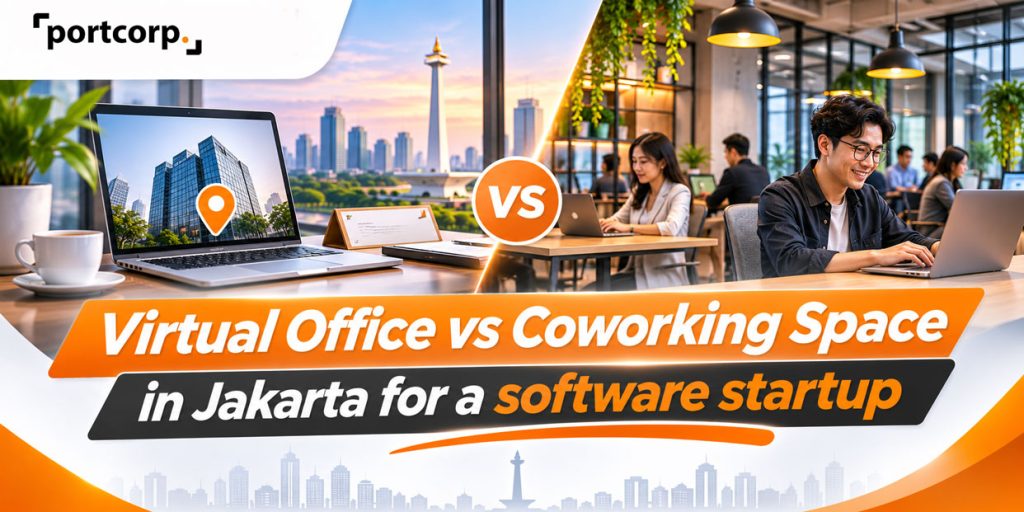
Choosing the right office arrangement is an important decision for software startups entering the Indonesian market. Jakarta offers various workspace options, ranging from traditional office leases to virtual offices and flexible coworking facilities. For technology entrepreneurs, the challenge is determining which arrangement supports business registration, daily operations, and future expansion without creating unnecessary expenses.
Unlike conventional businesses that require permanent customer-facing premises, many software companies can operate with distributed development teams. Programmers, UI/UX designers, quality assurance engineers, and project managers often collaborate through cloud-based platforms, allowing companies to deliver software without maintaining a large physical office. However, startups still need to consider their registered business address, client meetings, employee collaboration, and applicable regulatory requirements.
Two popular options are virtual offices and coworking spaces, but they serve different purposes. A virtual office primarily supports business address and administrative needs, while a coworking space provides physical facilities where employees can work. Understanding these differences can help software founders select an arrangement that matches their business model and stage of growth.
Understanding Virtual Offices and Coworking Spaces in Jakarta
A virtual office provides a business address and selected administrative services without requiring a company to occupy dedicated office space every day. Depending on the provider and package, services may include mail handling, reception support, telephone answering, and access to meeting rooms. This arrangement is often considered by startups whose employees work remotely but whose company still requires a formal business presence.
A coworking space, by comparison, offers shared physical workspace that individuals and teams can use regularly. Facilities may include desks, internet access, meeting rooms, common areas, and private offices available through flexible membership arrangements. Some coworking operators also provide business address services, although the availability and regulatory suitability of those services must be verified separately.
The distinction matters because a company may need an administrative address without needing daily workspace, or it may need collaborative facilities without requiring a separate registered address service. A software startup should evaluate these requirements independently before choosing a provider. In some situations, combining both arrangements may be more practical than selecting only one.
1. Which Option Is More Cost-Effective for an Early-Stage Software Startup?
Cost is frequently the first consideration for software founders establishing operations in Jakarta. During the early stages, startups may need to prioritize developer salaries, cloud infrastructure, product testing, cybersecurity, and customer acquisition over office expenditure. A workspace arrangement that consumes too much of the operating budget can reduce the funds available for product development.
Virtual offices generally have lower recurring costs than coworking memberships because they do not provide permanent desks for every employee. However, the actual price depends on the business district, provider, contract duration, and administrative services included. Additional charges may apply for meeting room usage, document handling, or other facilities.
Coworking spaces typically charge according to membership type, desk access, or private office capacity. A small development team using the facility occasionally may find flexible passes manageable, while a larger team requiring daily access could face significantly higher monthly expenses. Founders should compare the total cost of their expected usage rather than relying only on advertised starting prices.
2. Which Workspace Better Supports Remote Software Development?
Remote development has become a practical operating model for many software companies. Developers can manage source code through version control systems, coordinate projects using collaboration platforms, and participate in meetings without working from the same physical location. For startups with established remote workflows, maintaining permanent office desks may provide limited additional value.
A virtual office can complement this model by providing an administrative business address while employees continue working from their preferred locations. The company can use meeting facilities when necessary without committing to daily office occupancy. This arrangement may be suitable for SaaS businesses, custom software development firms, and technology consultancies with relatively small local teams.
However, remote work is not equally effective for every organization or project. Some development teams benefit from regular face-to-face discussions, especially when working on complex product architecture or coordinating closely with business stakeholders. Founders should consider whether their team performs effectively through remote collaboration before deciding that physical workspace is unnecessary.
3. When Does a Coworking Space Offer Better Team Collaboration?
Coworking spaces can provide advantages for software startups that rely on frequent collaboration between developers, designers, product managers, and commercial teams. Having employees in the same location may simplify certain discussions, particularly during intensive product development periods. Teams can also use shared meeting facilities for sprint planning, technical workshops, and internal training.
For newly formed teams, physical interaction may help establish communication routines and company culture. Junior developers may benefit from direct mentoring, while product teams may find it easier to resolve complex design questions through collaborative sessions. These advantages can be relevant when a startup is developing its first product or preparing for a major launch.
Nevertheless, renting coworking desks does not automatically improve productivity. A noisy shared environment may be unsuitable for engineers who need uninterrupted concentration, while private rooms may involve additional costs. Founders should assess the actual workspace conditions and determine whether they support the team’s preferred working methods.
4. Can Both Options Be Used as a Registered Business Address?
A registered business address is an important consideration for software startups establishing an Indonesian company. A PT or PT PMA must maintain appropriate corporate address information for incorporation, licensing, taxation, and official correspondence. However, the ability to use a particular address depends on the company’s activities and the applicable regulatory requirements.
Certain virtual office arrangements may be suitable for company registration when the provider and location satisfy the relevant conditions. Similarly, some coworking operators offer registered address services, but ordinary desk membership should not automatically be treated as permission to register a company at the premises. Founders should confirm whether the proposed contract specifically permits the intended administrative use.
The company’s KBLI classification, OSS licensing requirements, and tax registration plans should also be reviewed before selecting an address. A software consultancy operating remotely may have different premises considerations from a company maintaining physical infrastructure or specialized equipment. For foreign-owned startups, these matters should be clarified before preparing PT PMA incorporation documents.
5. How Do Virtual Offices and Coworking Spaces Compare for PT PMA Companies?
Foreign investors establishing a software development PT PMA must consider both their operating model and corporate administration requirements. A company may need a recognized Indonesian address even when its founders remain overseas and its developers work remotely. The selected arrangement should support the company’s actual activities and applicable registration obligations.
A virtual office may offer a practical starting point for an eligible foreign-owned software company that does not require permanent premises. However, founders must verify the provider’s documentation, contractual conditions, and address suitability before relying on the arrangement for incorporation. The availability of a prestigious Jakarta address does not automatically establish regulatory eligibility.
Coworking facilities may be attractive when the PT PMA plans to hire a local development team immediately. Regular desk access can support employee onboarding, project coordination, and customer meetings, while flexible contracts may reduce the commitment associated with a conventional office lease. The company should still confirm whether the membership includes a suitable registered business address or whether a separate arrangement is required.
6. Which Option Is Better for Client Meetings and Investor Presentations?
Software startups frequently meet corporate customers, potential investors, implementation partners, and technology vendors. These meetings may involve product demonstrations, contract negotiations, technical workshops, or discussions about commercial expansion. The availability of suitable meeting facilities can therefore influence the workspace decision.
Virtual office providers may offer meeting rooms that can be reserved when needed. This arrangement can work well for founders who conduct most customer discussions online but occasionally require a professional meeting location. Before choosing a package, the company should verify room availability, booking conditions, capacity, and additional charges.
Coworking spaces may provide more convenient access to meeting rooms when employees already use the facility regularly. Some operators also offer event spaces and informal networking areas that can support business development activities. However, founders should evaluate whether the environment provides sufficient privacy for confidential commercial discussions.
7. How Important Are Privacy and Data Security?
Software development companies often handle confidential information, including source code, customer data, product designs, and commercial agreements. Workspace decisions should therefore consider privacy and information security alongside cost and convenience. A facility that appears attractive commercially may not be appropriate for every type of development activity.
For remote-first companies using a virtual office, security responsibilities remain primarily connected to their technology systems and internal operating procedures. Employees should use appropriate access controls, secure devices, and protected communication channels when handling sensitive information. The virtual office provider’s document-handling procedures should also be reviewed when official correspondence may contain confidential records.
Coworking spaces introduce additional physical security considerations because employees may work near people from unrelated organizations. Startups should assess internet security, meeting room privacy, equipment storage, and access to shared facilities. Businesses handling particularly sensitive information may prefer private offices or controlled working environments.
8. Does the Choice Affect Recruitment and Employee Retention?
Workspace arrangements can influence how software startups attract and retain employees. Some developers value the flexibility of working remotely, while others prefer regular access to an office where they can collaborate with colleagues. The most suitable arrangement depends on the company’s hiring strategy and the expectations of its workforce.
A virtual office can support a distributed recruitment model by allowing the company to hire suitable employees without requiring everyone to commute to central Jakarta. This may be beneficial when technical talent is located across different Indonesian cities. However, management must establish effective communication, supervision, and employee support procedures.
Coworking spaces may appeal to employees who prefer a structured workplace but do not want to work from a traditional corporate office. They can provide access to professional facilities and opportunities for interaction with other businesses. Founders should consider employee preferences alongside productivity and budget requirements when evaluating these benefits.
9. Which Arrangement Offers Greater Flexibility as the Startup Grows?
Software startups can experience significant changes in team size and operational requirements. A business may begin with three developers and later expand after securing investment or signing a major customer contract. Choosing a workspace arrangement that accommodates these changes can reduce the need for disruptive relocation.
Virtual offices offer flexibility when physical occupancy remains limited because the company does not need to rent additional desks whenever it hires remote employees. However, the arrangement may become less suitable if the startup develops a substantial local team requiring regular collaboration. The company may eventually need dedicated workspace while retaining or updating its registered address.
Coworking spaces can offer scalable membership arrangements, allowing businesses to add desks or move into private offices as their teams expand. Availability and pricing will depend on the operator and location, so expansion should not be assumed to be guaranteed. Founders should examine renewal terms, membership limits, and future capacity before committing to a provider.
10. What About Tax Registration and PKP Requirements?
Tax administration is another important consideration when selecting a business address in Jakarta. A startup may need to evaluate its taxpayer registration and potential Pengusaha Kena Pajak (PKP) status depending on its commercial activities and applicable tax rules. The address used for corporate registration may also be relevant to certain tax administration procedures.
Directorate General of Taxes Regulation PER-07/PJ/2025 establishes specific conditions for qualifying businesses applying for PKP registration using a virtual office. These include requirements relating to the type of business activity, the virtual office arrangement, and the facilities provided by the operator. For applicable businesses, the agreement must have a minimum duration of one year from the PKP application date.
A coworking membership does not automatically satisfy these requirements merely because it provides access to physical desks. Likewise, a virtual office package should not be assumed suitable for PKP registration without reviewing the provider’s documentation and relevant conditions. Founders should clarify their tax registration objectives before selecting either arrangement.
Virtual Office vs Coworking Space: Comparison for Jakarta Software Startups
The following comparison summarizes the practical differences between the two arrangements. Actual features, prices, and registration suitability depend on the individual provider and contract. Software founders should use the comparison as a starting point rather than assuming that every facility offers identical services.
| Consideration | Virtual Office | Coworking Space |
|---|---|---|
| Primary purpose | Business address and administrative services | Physical workspace and team collaboration |
| Recurring cost | Generally lower | Depends on desk access and team size |
| Daily workstations | Usually not included | Available according to membership |
| Remote team suitability | Particularly suitable | Useful for hybrid teams |
| Meeting rooms | Often available by reservation | Commonly available, subject to package |
| Registered address | Possible when requirements are satisfied | Possible if specifically supported and compliant |
| Team collaboration | Limited physical interaction | Supports regular in-person interaction |
| Expansion flexibility | Suitable for distributed teams | Can accommodate additional desks where available |
| Privacy considerations | Document handling and remote security | Shared workspace and network security |
| Best fit | Lean, remote-first software businesses | Startups needing regular physical collaboration |
The comparison highlights why neither option is universally better for every technology company. A virtual office may be more economical for a remote SaaS startup, while coworking facilities may offer greater practical value for a team that collaborates in person every day. The most appropriate decision depends on the company’s actual requirements rather than the popularity of either workspace model.
Practical Example: Choosing a Workspace for a Foreign-Owned SaaS Startup
Consider a Singapore-based technology company preparing to establish a PT PMA in Jakarta. The business develops subscription-based inventory management software for Indonesian manufacturers and initially plans to employ four remote developers. Its founders visit Indonesia periodically for customer meetings but do not expect to maintain a permanent local office team during the first year.
In this situation, a suitable virtual office may provide the administrative address and occasional meeting facilities the company needs. The founders should first confirm that the proposed address supports their business classification, incorporation requirements, and intended tax registration arrangements. If these conditions are satisfied, the company may avoid paying for workstations that employees rarely use.
Now consider the same startup after securing several enterprise customers and expanding to fifteen employees in Jakarta. The company may need regular product workshops, implementation meetings, and employee onboarding sessions that are easier to conduct in person. A coworking facility or private office may become more practical, even if the company continues using a separate registered address arrangement.
This example illustrates how workspace requirements can evolve alongside business operations. A startup does not necessarily need to select a permanent office model at incorporation, but it should understand the administrative implications of changing arrangements later. Planning for growth can help management balance cost control with operational effectiveness.
Can a Software Startup Combine a Virtual Office and Coworking Space?
Some software startups may benefit from combining a registered virtual office arrangement with flexible coworking access. This model allows the company to maintain an administrative address while purchasing physical workspace only when employees need it. It may be particularly suitable for businesses operating through a hybrid work model.
For example, a company could use a qualifying virtual office address for its corporate administration while arranging coworking day passes for weekly development meetings. Employees could continue working remotely during the rest of the week, reducing the need for permanent desks. This arrangement can provide flexibility without eliminating opportunities for face-to-face collaboration.
However, founders should evaluate the total cost of both services and confirm that the registered address arrangement satisfies the relevant requirements. Using two providers may also introduce additional coordination responsibilities. The decision should therefore be based on expected workspace usage and administrative needs.
How Portcorp Helps Software Startups Evaluate Jakarta Virtual Office Options
For foreign founders, choosing between a virtual office and coworking space involves more than selecting a convenient place to work. The decision may affect company registration planning, corporate administration, business licensing, and future operational arrangements. Understanding these considerations before signing an agreement can help startups avoid unnecessary complications.
Portcorp provides business establishment and corporate administration support for companies entering the Indonesian market. Software entrepreneurs exploring a virtual office jakarta arrangement can discuss relevant registration considerations and available business setup support with the Portcorp team. This can be particularly useful for foreign-owned technology businesses preparing to establish a PT PMA while managing development teams across different locations.
Depending on the company’s circumstances and the agreed service scope, Portcorp can help discuss incorporation requirements, business address considerations, and related administrative needs. Founders can explain their proposed activities, ownership structure, team size, and expected office usage to make the discussion more relevant. The suitability of any specific address or provider should still be verified before entering into an agreement.
Frequently Asked Questions
Is a virtual office cheaper than coworking space in Jakarta?
Virtual offices generally cost less because they primarily provide business address and administrative services rather than permanent workstations. Coworking costs depend on the number of users, membership type, and facilities included. Founders should compare the total expected monthly expense, including meeting room charges and additional services.
Can a software development PT PMA use a virtual office in Jakarta?
A software development PT PMA may be able to use a virtual office when the proposed address satisfies applicable incorporation, licensing, and administrative requirements. Eligibility depends on the company’s activities and the provider’s arrangements. Foreign investors should verify the address before preparing registration documents.
Is coworking space better for software developers?
Coworking can be useful when developers benefit from regular in-person collaboration, mentoring, or project workshops. However, some development teams work effectively through remote collaboration and do not require daily physical workspace. The best arrangement depends on the team’s working methods and operational needs.
Can a coworking address be used for company registration?
Some coworking operators provide registered address services, but ordinary desk membership does not automatically include this permission. The company should confirm the contractual terms and applicable regulatory requirements. A suitable physical workspace and a compliant registered address are related but separate considerations.
Should a SaaS startup start with a virtual office or coworking space?
A remote-first SaaS startup with limited physical workspace requirements may find a virtual office more economical. A company hiring a local team that needs frequent collaboration may benefit more from coworking facilities. Founders should also consider whether the selected arrangement supports their incorporation and tax registration objectives.
Choose the Workspace That Fits Your Software Startup
The choice between a virtual office and coworking space in Jakarta should begin with an assessment of how the software startup actually operates. A virtual office can provide a cost-effective administrative presence for eligible remote-first businesses, while coworking facilities offer physical workspace that supports regular collaboration. Neither arrangement is automatically the best choice for every technology company.
Founders should evaluate their registered address requirements, team structure, budget, customer meeting needs, and expected expansion plans. Foreign-owned startups should also confirm that the proposed arrangement is suitable for their PT PMA registration and relevant licensing obligations. Making these checks before signing a contract can help reduce unnecessary administrative and operational expenses.
For many software companies, the most effective solution may change as the business grows. A lean startup may begin with a virtual office and occasional meeting room access, then move toward coworking or dedicated premises as its team expands. Selecting a flexible arrangement allows the company to support its current needs without overlooking future development.
Not Sure Whether Your Jakarta Startup Needs an Address, Desks, or Both?
Your software startup may already have developers working remotely, but you still need to decide how to establish a business presence in Jakarta. Perhaps you are considering a virtual office because your team rarely meets in person, or you are comparing coworking memberships because local employees need somewhere to collaborate. Before committing to either arrangement, it is worth examining how your registered address requirements and actual workspace needs fit together.
Portcorp can help you discuss the business setup considerations relevant to your proposed Jakarta operations. Share your planned company structure, software activities, approximate team size, and whether you expect employees to use physical workspace regularly. These details can help make the initial discussion more useful and identify which administrative questions should be resolved before choosing a provider.
Contact Portcorp for a free initial consultation via WhatsApp
You do not need to pay for a full office if your startup only needs a suitable registered address, but you should not choose an address package without checking its intended use. Contact Portcorp for a free initial consultation via WhatsApp +62 816-1339-900 and discuss how your workspace decision relates to establishing your software business in Indonesia. The conversation can help you approach your Jakarta office arrangements with clearer priorities and fewer unnecessary commitments.
