How to Brief an Indonesian Tax Adviser Before Your First Consultation
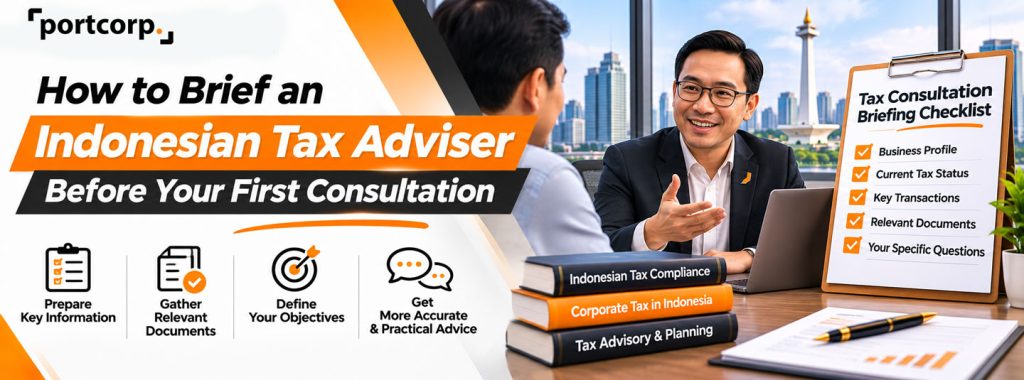
Meeting an Indonesian tax adviser for the first time can be an important step toward improving your company’s financial management and regulatory compliance. Whether you operate a newly established PT PMA, manage an expanding Indonesian business, or represent an overseas company entering the local market, professional tax advice can help you understand your obligations and identify issues that require attention.
However, the quality of a tax consultation often depends on how well the client prepares beforehand. Business owners sometimes approach their first meeting with general questions about corporate income tax, VAT, or tax reporting without providing enough information about their operations. As a result, the adviser may spend much of the consultation gathering basic facts instead of discussing practical solutions.
Preparing a clear briefing can make the initial discussion more productive. By organizing your business information, identifying your main concerns, and collecting relevant documents, you can help an Indonesian tax adviser understand your situation more efficiently. This guide explains how to prepare for your first tax consultation and what information should be included in your briefing.
Why Preparing a Tax Adviser Briefing Matters
Indonesia’s tax system includes several obligations that may apply differently depending on a company’s legal structure, business activities, revenue, employees, and commercial transactions. A company providing professional services may have different tax considerations from a manufacturing business, importer, or digital technology startup. Foreign-owned companies may also need to consider cross-border payments, related-party transactions, and applicable tax treaty provisions.
An Indonesian tax adviser needs to understand these circumstances before recommending an appropriate course of action. Without sufficient background information, the adviser may be unable to identify which obligations apply or whether a particular transaction requires further investigation. Providing a structured briefing allows the discussion to focus on the issues most relevant to your business.
Good preparation also helps company management establish realistic expectations. Some questions can be answered during an initial consultation, while others require document reviews, transaction analysis, or additional professional work. Understanding this distinction can help you determine what support your company actually needs.
1. Begin With a Clear Description of Your Business
The first section of your briefing should explain what your company does and how it generates revenue. Avoid relying solely on a broad industry description such as consulting, trading, or technology, because businesses within the same industry can have very different tax obligations. Instead, describe the products or services you provide, the types of customers you serve, and how commercial transactions are structured.
For example, a software company might develop applications for Indonesian clients while also selling subscriptions to overseas customers. A manufacturing business may purchase imported machinery, source materials locally, and sell finished products to domestic distributors. These details help the adviser identify relevant questions about income recognition, withholding taxes, VAT, and international transactions.
You should also explain whether the company is already operating or still preparing to launch. A newly incorporated business may need guidance on establishing tax administration procedures, while an established company may require assistance reviewing existing filings. Providing this context allows the adviser to understand your immediate priorities.
2. Explain Your Company’s Legal Structure and Ownership
Your company’s legal structure is another essential part of the briefing. An Indonesian domestic PT, a foreign-owned PT PMA, and a permanent establishment may face different tax and administrative considerations. The adviser should understand which structure applies before discussing compliance obligations or potential tax planning opportunities.
For a PT PMA, provide a basic overview of the shareholders, ownership percentages, directors, and relevant foreign relationships. You should also identify whether the company has overseas parent entities, affiliated businesses, or shareholders receiving payments from Indonesia. These relationships may be relevant when evaluating dividends, management fees, royalties, intercompany services, or other cross-border transactions.
It is not always necessary to provide every corporate document before an introductory discussion. However, having the company’s establishment deed, relevant corporate registration details, and ownership information available can make the consultation more effective. The adviser can then identify which additional documents may be required for a more detailed review.
3. Identify the Main Reason You Need Tax Advice
Before scheduling your consultation, decide what you want to achieve from the meeting. Some businesses need help understanding routine monthly and annual tax obligations, while others are concerned about a specific transaction or an unresolved compliance issue. A clear objective helps the adviser prioritize the discussion and allocate time appropriately.
For example, a newly established consulting PT PMA may want to understand corporate income tax, employee withholding obligations, and VAT registration. An established trading company may need assistance reviewing the tax treatment of imported goods or payments to foreign suppliers. Another business may have received correspondence from the Directorate General of Taxes and require guidance on its next steps.
If your company has several concerns, arrange them in order of urgency. Matters involving official deadlines, pending correspondence, or potentially incorrect filings should generally receive early attention. Less urgent questions about long-term tax planning can be discussed after immediate compliance risks have been identified.
4. Prepare Your Basic Corporate and Tax Documents
An Indonesian tax adviser may request documents to verify the company’s registration status and understand its existing compliance arrangements. Preparing these materials before the meeting can reduce unnecessary follow-up communications. However, you should confirm which documents are needed and use an appropriate secure method for sharing sensitive information.
Useful documents may include the company’s deed of establishment, relevant amendments, Business Identification Number (NIB), taxpayer identification information, and available tax registration records. If the company has already submitted tax returns, copies of relevant filings and payment records may also be helpful. Businesses with existing accounting systems should be prepared to explain how financial records are maintained.
You do not necessarily need to send every document immediately. A short document inventory may be sufficient for the first discussion, particularly when the consultation is intended to identify the scope of future work. The adviser can then request specific records after understanding the company’s circumstances.
5. Summarize Your Revenue, Expenses, and Transactions
Tax advisers need to understand how money moves through your business. A useful briefing should therefore include an overview of your main revenue sources, significant expenses, and transaction patterns. Exact financial statements may not be necessary for an introductory conversation, but reasonable figures and representative examples can help establish the context.
For instance, explain whether your customers are primarily Indonesian companies, individual consumers, or overseas businesses. Identify whether your company receives subscription payments, project fees, commissions, royalties, or other types of income. You should also describe significant payments to employees, contractors, suppliers, and related parties.
If your business handles foreign currency transactions, imported goods, or payments to overseas entities, mention these activities separately. Such transactions may require additional analysis concerning withholding tax, VAT, customs-related taxes, or treaty eligibility. A clear transaction summary helps the adviser determine which issues deserve further examination.
6. Describe Your Current Tax Filing and Payment Procedures
If your company is already operating, explain how it currently manages tax calculations, payments, and reporting. Some businesses rely on internal accounting teams, while others use external bookkeepers or tax service providers. Understanding the existing process helps the adviser identify whether the main concern involves technical tax interpretation, administrative procedures, or internal controls.
You should describe who prepares the company’s tax information, who reviews it, and who authorizes submissions. It is also useful to mention whether the company uses accounting software and how supporting invoices, payment records, and transaction documents are stored. These details can reveal practical weaknesses that may not be obvious from reviewing tax returns alone.
Indonesia’s Coretax administration system is also relevant to current tax workflows. If your company has experienced registration, access, data reconciliation, or filing difficulties, include those issues in your briefing. The adviser can then assess whether the problem requires procedural assistance, data verification, or a broader review of the company’s tax administration.
7. Highlight Any Outstanding Tax Problems
Business owners sometimes hesitate to mention previous tax mistakes during an initial consultation. However, incomplete information can make it difficult for an adviser to assess the company’s actual exposure. A professional consultation is more useful when management provides an accurate description of known problems and uncertainties.
Potential issues may include missed filing deadlines, discrepancies between accounting records and tax returns, incorrect withholding tax calculations, or uncertainty about VAT treatment. The company may also have received an SP2DK clarification request, tax assessment, audit notification, or other official correspondence. These matters should be identified clearly, together with any applicable response deadlines.
Rather than attempting to explain every technical detail, prepare a short chronology of the issue. Include when the problem arose, which tax periods may be affected, what actions have already been taken, and what documents are available. This information allows the adviser to identify immediate priorities and determine whether additional specialist assistance is required.
8. Explain Your Employees and Contractor Arrangements
Employee and contractor payments can create important tax obligations for Indonesian businesses. Companies may need to calculate and report withholding taxes associated with salaries, bonuses, professional fees, and other payments. The relevant treatment depends on the recipient, payment type, and applicable regulations.
Your briefing should include an approximate employee headcount, the use of independent contractors, and whether any foreign nationals work for the company. It should also describe significant compensation arrangements, including recurring allowances or payments to directors where relevant. This information helps the adviser understand the company’s payroll-related tax administration.
For foreign-owned companies, arrangements involving expatriate employees or overseas consultants may require additional attention. The adviser may need to examine residency, employment circumstances, payment arrangements, and applicable tax rules. Raising these issues early can help prevent important questions from being overlooked.
9. Identify Cross-Border Transactions and Related-Party Payments
Cross-border activities deserve particular attention when briefing an Indonesian tax adviser. A PT PMA may purchase services from its overseas parent company, pay software licensing fees, receive intercompany loans, or distribute dividends to foreign shareholders. These transactions can involve Indonesian withholding taxes, tax treaty considerations, and transfer pricing requirements.
Prepare a simple summary identifying the foreign counterparties, countries involved, types of payments, and approximate transaction values. If contracts or invoices are available, mention them in your document inventory. The adviser can then determine whether additional information is needed to evaluate the relevant tax treatment.
Do not assume that every international payment receives the same tax treatment. The outcome may depend on the nature of the transaction, contractual arrangements, applicable domestic law, and treaty conditions. A well-prepared briefing makes it easier to identify these distinctions before the company takes further action.
10. Prepare Specific Questions for the First Meeting
A productive tax consultation should include questions that reflect your company’s actual circumstances. General questions can be useful, but specific questions usually lead to more actionable discussions. Instead of asking only how Indonesian corporate taxes work, explain which transaction or compliance process you need to understand.
For example, you might ask whether your company needs to review its VAT registration status, how certain payments should be documented, or what information is required to assess an existing filing discrepancy. You may also want to understand which tasks can be handled internally and which require external professional assistance. These questions help clarify the adviser’s proposed approach and the company’s responsibilities.
It is equally important to ask about the expected scope of any follow-up work. A preliminary consultation may identify risks without resolving every technical question, particularly where supporting documents have not yet been reviewed. Understanding the next steps helps management make informed decisions about additional services.
A Practical Tax Adviser Briefing Template
A concise written briefing can help both parties prepare for the initial discussion. The document does not need to be lengthy, but it should contain enough information to explain the business and its most important tax concerns. The following structure can be adapted for a newly established company or an existing Indonesian business.
| Briefing Section | Information to Prepare |
|---|---|
| Company profile | Legal entity, industry, principal business activities |
| Ownership structure | Domestic or foreign ownership, parent company, related parties |
| Business operations | Products, services, customers, and revenue model |
| Tax registration | Available taxpayer registration and PKP information |
| Financial overview | Approximate revenue, major expenses, and transaction patterns |
| Current compliance | Filing procedures, responsible personnel, and accounting systems |
| International transactions | Overseas payments, receipts, and related-party arrangements |
| Outstanding issues | Notices, discrepancies, missed filings, and relevant deadlines |
| Consultation objectives | Main questions and desired outcomes |
| Available documents | Corporate records, returns, invoices, contracts, and financial statements |
The briefing should remain factual and distinguish confirmed information from matters that still require verification. If a document is missing or a figure is uncertain, identify the gap rather than presenting an estimate as a verified fact. This approach helps the adviser assess the reliability of the information and prioritize further document requests.
Practical Example: Preparing a PT PMA for Its First Tax Consultation
Consider a foreign-owned management consulting company that recently established a PT PMA in Jakarta. The business provides advisory services to Indonesian corporate clients and occasionally purchases specialist services from its overseas parent company. Its directors want to understand the company’s tax reporting obligations before transaction volumes increase.
Instead of requesting a general explanation of Indonesian taxation, the finance manager prepares a two-page briefing. The document explains the company’s ownership structure, services, expected annual revenue, employee arrangements, and anticipated payments to the overseas parent. It also identifies questions about VAT registration, withholding taxes, and the treatment of intercompany service fees.
During the consultation, the adviser can use this information to identify which matters require immediate attention and which require additional documentation. The company can then agree on a more focused review rather than commissioning an unnecessarily broad assessment. This preparation helps management use the consultation as a practical decision-making exercise.
How to Evaluate an Indonesian Tax Adviser
Preparing a good briefing is only part of the process. Businesses should also consider whether the adviser has appropriate qualifications and experience for the matters involved. A consultant experienced in routine domestic compliance may not necessarily be the most suitable professional for a complex PT PMA restructuring or international tax dispute.
Indonesia regulates the tax consulting profession, including professional licensing and the activities of persons acting as taxpayer representatives. Minister of Finance Regulation No. 55 of 2026 addresses tax consultants and other parties acting as taxpayer representatives, including professional obligations and permit classifications. Companies should therefore verify the relevant qualifications and authorization when engaging someone to provide regulated tax consulting or representation services.
Foreign-owned companies should pay particular attention to whether the professional’s authorization covers their circumstances. They should also ask how the adviser manages confidentiality, communicates findings, and defines the scope of an engagement. Clear expectations can help establish a more effective working relationship.
How Portcorp Can Support Your Indonesian Tax Consultation Preparation
For business owners and foreign investors, preparing tax information can be challenging when corporate records, accounting data, and regulatory responsibilities are managed by different people. A company may understand its commercial operations but still need help identifying which documents and tax questions should be prioritized. Coordinating these matters before the first consultation can make the discussion more focused.
Portcorp provides business administration and tax-related support for companies operating in Indonesia. Businesses exploring Tax Consultant Service Indonesia can use Portcorp’s resources to understand the role of tax consultants and the types of matters that may require professional attention. Depending on the company’s needs and the agreed service scope, Portcorp can also help discuss relevant tax administration concerns and coordinate appropriate follow-up support.
For foreign-owned companies, this can be particularly useful when tax questions overlap with incorporation records, corporate administration, and ongoing compliance. Preparing a structured overview of these matters can help clarify the assistance required. Any regulated tax advice or taxpayer representation should be undertaken by appropriately qualified and authorized professionals.
Frequently Asked Questions
What documents should I bring to my first Indonesian tax consultation?
Start with a company profile, relevant corporate registration information, tax registration details, and a summary of your main transactions. If the company is already operating, recent tax filings, financial statements, and supporting documents may also be useful. The adviser can confirm which records are necessary after reviewing your initial concerns.
Do I need complete financial statements before speaking to a tax adviser?
Not necessarily. An initial consultation can often begin with a reasonable overview of revenue, expenses, and business activities. However, accurate financial statements and transaction records may be required before the adviser can provide detailed recommendations or complete a tax review.
Can an Indonesian tax adviser help with PT PMA tax obligations?
An appropriately qualified adviser can assist with tax matters relevant to foreign-owned companies, subject to the professional’s authorization and the agreed engagement scope. These matters may include domestic tax compliance, withholding taxes, cross-border transactions, and tax administration. Companies should verify that the professional’s qualifications are suitable for their circumstances.
Should I disclose previous tax filing mistakes during the first meeting?
Yes. Known filing discrepancies, missed deadlines, and official tax correspondence should be identified during the consultation. Providing accurate information helps the adviser assess the issue and determine whether urgent action or further document review is necessary.
How long should a tax adviser briefing be?
For many businesses, a concise briefing of approximately two or three pages can provide a useful starting point. The appropriate length depends on the complexity of the company and the number of issues involved. Supporting documents can be organized separately and shared securely when requested.
A Better Tax Consultation Begins With Better Preparation
Your first meeting with an Indonesian tax adviser should be more than a general conversation about tax rules. It should help you understand your company’s most important obligations, identify areas requiring further review, and establish practical priorities for improving compliance. Achieving these outcomes becomes easier when the adviser receives accurate and relevant information before the discussion begins.
A useful briefing explains your business model, ownership structure, financial activities, existing tax procedures, and any unresolved concerns. It also identifies specific questions and the decisions management needs to make. By preparing this information in advance, you can spend less time explaining basic facts and more time discussing matters that affect your business.
For PT PMA directors, finance managers, and foreign investors, this preparation is especially valuable when Indonesian tax obligations involve cross-border transactions or unfamiliar administrative procedures. A structured first consultation can provide a clearer starting point for ongoing tax management and professional support.
Make Your First Tax Consultation About Decisions, Not Missing Documents
If your company is preparing to meet an Indonesian tax adviser, you do not need to arrive with every tax question already answered. What matters is having a clear picture of your business, the transactions that concern you, and the decisions you want to make after receiving professional guidance. A short, organized briefing can turn an introductory conversation into a useful starting point for addressing your company’s tax priorities.
Portcorp can help you begin that discussion by reviewing the general nature of your business and the tax administration concerns you want to raise. Whether you are establishing a new PT PMA, managing an existing Indonesian company, or coordinating financial responsibilities with overseas shareholders, explaining your situation in advance can help identify the most relevant next steps. You can start by sharing your company type, industry, and the two or three tax questions you consider most urgent, without sending confidential financial documents through an unsecured chat.
Prepare your questions, identify your priorities, and arrange a free initial tax consultation with Portcorp.
Contact the team through WhatsApp +62 816-1339-900 to explain your situation and discuss the appropriate next steps for your Indonesian business.
